


How to Layer Clothes for Winter Without Looking Bulky
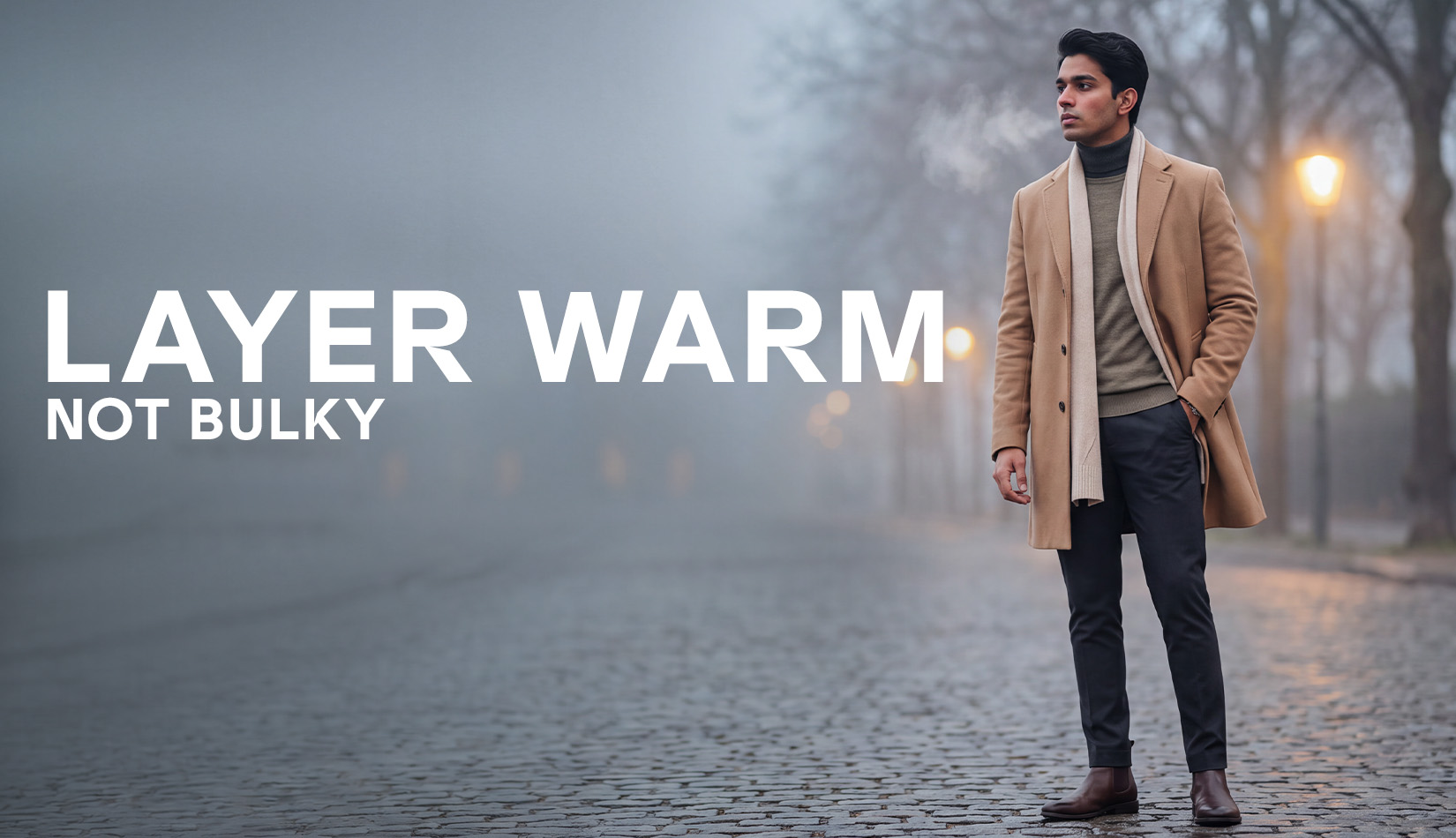
Warm doesn't have to mean shapeless. Here's how to build winter outfits that keep the cold out and your silhouette intact.
Every winter, the same thing happens. The temperature drops, you start pulling on everything you own, and somewhere between the third layer and the fourth you stop looking like yourself. You're warm, sure, but you look like a walking duvet.
Knowing how to layer clothes for winter without looking bulky is less about owning expensive pieces and more about understanding a few simple ideas: which layers go where, how fabrics behave, and how to keep your proportions in check. Get those right and you can wear four layers and still look like you only wore two.
Here's the approach that works, whether you're dressing for a Delhi morning in January or a hill-station weekend.
How to Layer Clothes for Winter: Start With Thin Layers
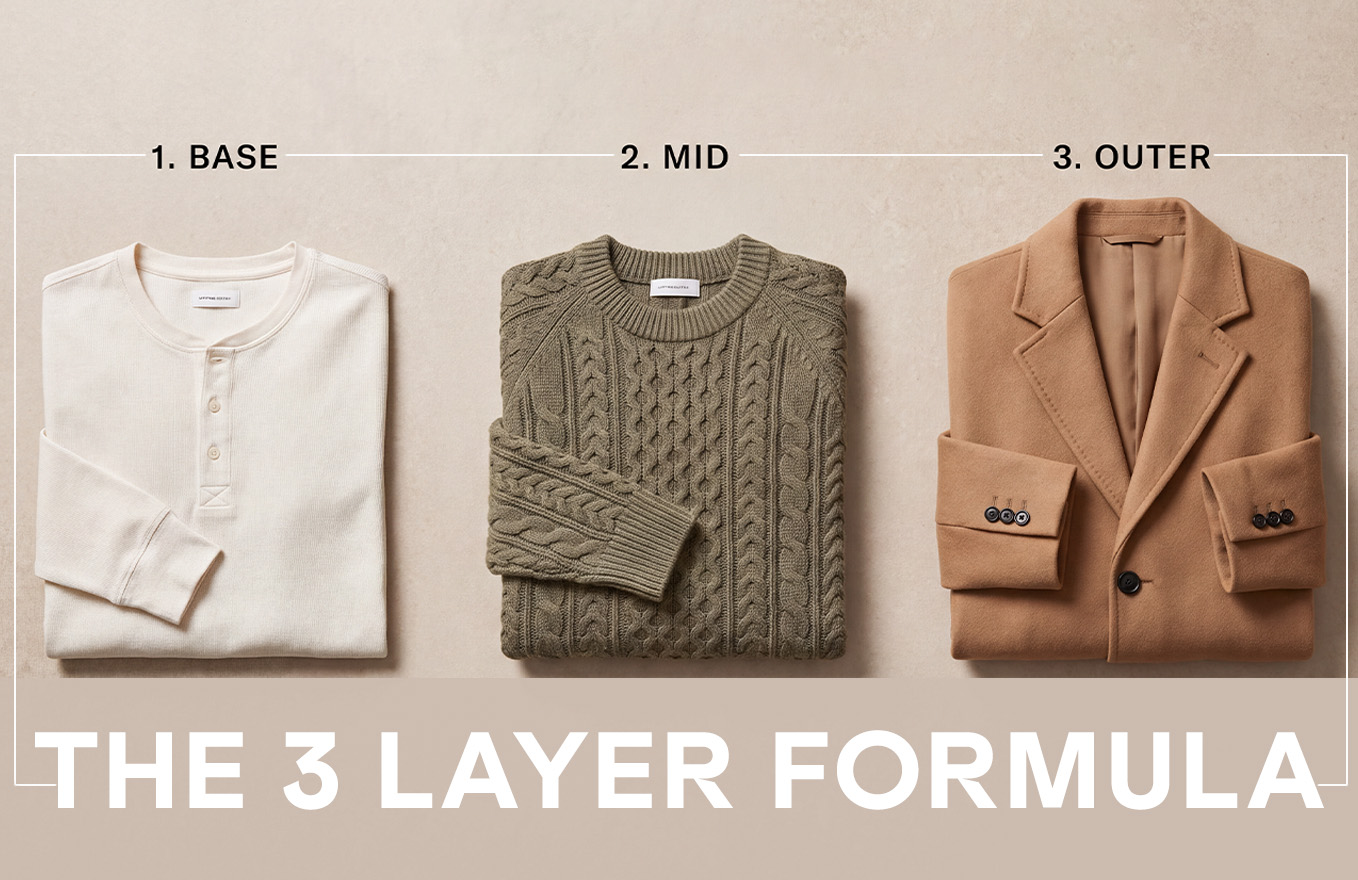
The most common layering mistake is thinking that more warmth means thicker clothes. It usually doesn't. Thick layers trap bulk. Thin layers trap air.
Air held between layers is what actually keeps you warm. Three light layers will often feel warmer than one heavy sweater, and they'll sit much closer to your body. They're also easier to adjust. Too warm in a heated metro or office? Take one off. Still cold? Add one back.
So rather than reaching for the heaviest piece in your wardrobe, think in terms of a stack: something light against the skin, something with a bit of warmth in the middle, and something to block wind and cold on the outside. Each one should earn its place.
The Three-Layer Formula
Almost every good winter outfit follows the same basic structure. Once you see it, you'll spot it everywhere.
1. The Base Layer
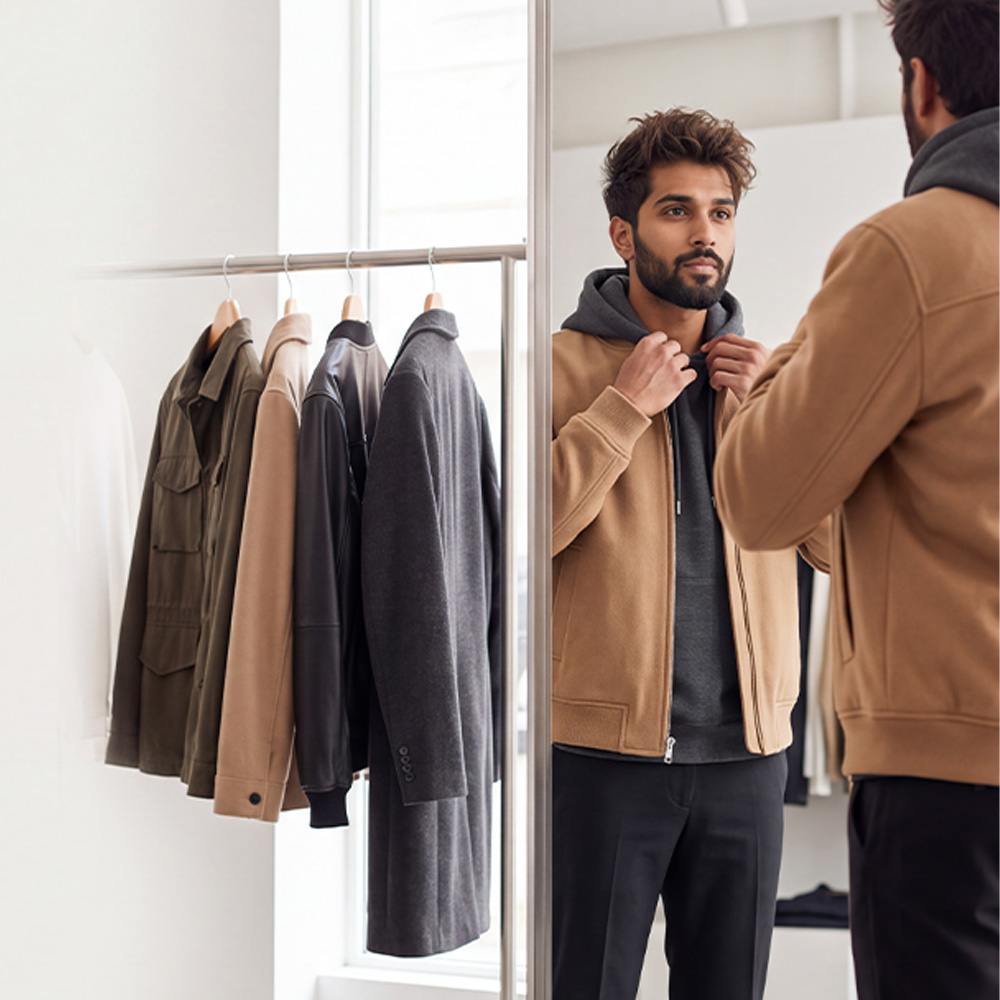
This is whatever sits closest to your skin. For most people in India's winters, a well-fitted cotton tee, a henley or a lightweight full-sleeve top does the job. You don't need thermal gear unless you're heading somewhere properly cold. What matters is that it's fitted enough to sit smoothly under everything else. A loose, baggy base layer bunches up under the next one, and that bunching is where most of the visible bulk comes from.
2. The Mid Layer
This is your warmth. A hoodie, a sweatshirt, a knit, an overshirt or a shacket all work here. It should be roomy enough to fit comfortably over the base, but not so oversized that it fights with the outer layer. If you only get one thing right, get this one right.
3. The Outer Layer
The jacket, coat or bomber that handles wind and the real cold. It should sit slightly looser than the mid layer, since it has to go over it, but it shouldn't swallow you. That's it. Three layers, each doing one job. When people end up looking bulky, it's usually because two layers are doing the same job, like a thick sweater under a thick hoodie under a puffer.
Pay Attention to Fabric Before Anything Else
Two outfits can have the same number of layers and look completely different because of fabric.
Smooth, dense fabrics sit flat. Think tightly woven cotton, fine knits and structured twill. Fluffy, chunky or heavily textured fabrics puff out and add visual volume.If you're layering several pieces, keep the layers closest to your body smooth and save texture for one statement piece, usually the outermost.
A few practical points:
- Avoid stacking multiple bulky textures. A chunky knit under a fleece-lined jacket is a recipe for bulk. Pick one texture to be the star.
- Choose fabrics that breathe. If your inner layers trap sweat, you'll feel clammy and end up wearing more to compensate. Cotton and good blends handle this well.
- Don't ignore weight. A heavy fabric hangs and drapes differently from a light one. Heavier pieces tend to look cleaner and more deliberate, as long as they fit well.
Get the Proportions Right
This is the part that separates outfits that look put together from outfits that look piled on. The goal isn't to wear tight clothes. It's to keep the proportions balanced so no single layer overwhelms the rest.
A reliable rule is that each layer going outward should be a little roomier than the one beneath it, but never dramatically so.
If your hoodie is oversized, your jacket needs to have enough room to sit over it without pulling across the shoulders. If your jacket is cropped, your hoodie shouldn't hang out the bottom by six inches.
Some quick checks:
- Sleeve lengths should step down. The base layer's cuff can peek out from under the mid layer, which can peek out from under the jacket. Staggered cuffs look intentional. Sleeves that all end in the same place look heavy.
- Hem lengths matter too. A slightly longer mid layer under a shorter jacket creates a clean, layered line at the hip. Done well, it adds visual interest without adding bulk.
- Balance the volume. If your top half is carrying a lot of layers, keep the bottom half simpler. A relaxed or straight-leg trouser pairs well with a layered top. Go wide on both, and the whole outfit loses its shape.
Make Your Mid Layer Do the Heavy Lifting
If there's one piece worth investing in, it's a good mid layer, because it's the one that decides how your outfit looks once the jacket comes off.
A well-cut hoodie is the easiest example. It adds warmth, it layers cleanly under a jacket, and it looks good on its own when you're indoors.
When you're choosing one, look for a clean fit through the shoulders, a hem that doesn't ride up, and a hood that sits flat rather than bunching at the neck. If you want something that holds its shape across a full winter of wear, the Incroy & Merv hoodies collection is a good place to see how different cuts and weights compare.
A shacket or overshirt is the other great option. It sits between a shirt and a jacket, which makes it perfect for people who want warmth without the weight of a full hoodie. Worn open over a plain tee, it gives you a lighter, more structured layer that rarely looks bulky.
Choose an Outer Layer That Fits the Rest of the Outfit
The jacket is where most layering decisions get made or broken. A bad jacket choice can undo a perfectly good mid layer.
A few things to think about:
Length
Hip-length jackets are the safest choice for layering. They keep your torso looking proportionate and they work with almost every kind of trouser.
Longer coats can look sharp, but they need more careful styling so they don't add visual weight.
Structure
A jacket that holds its shape, like a bomber or a well-cut utility jacket, tends to look slimmer than one that's soft and unstructured, even at the same size. Structure gives you a clean outline.
Room to Move
Put your mid layer on first, then try the jacket. If you can't comfortably cross your arms or raise them above shoulder height, it's too tight for layering. If you could fit another hoodie in there, it's too loose.
If you're building a winter outerwear lineup, the men's jackets collection is worth browsing for different weights and silhouettes, so you can see what suits the layers you already own.
Use Colour to Slim Things Down
Colour is the easiest trick in layering, and it costs nothing.
Staying within a similar tonal range, like black, charcoal and grey, or stone, tan and brown, creates a continuous line from top to bottom. Your eye reads the whole outfit as one shape rather than a stack of separate pieces, which makes you look leaner and more put together.
That doesn't mean you have to dress in one colour. It means keeping the contrast gentle. A few ways to do it:
- Go tonal. Different shades of the same colour family layered together look rich and deliberate.
- Let one layer stand out. If you want contrast, make it one piece, like a lighter hoodie under a darker jacket, rather than every layer competing for attention.
- Keep the base neutral. A white, black or grey base layer works with nearly everything and won't clash with what goes over it.
- Use darker colours where you want less attention. Darker shades recede, lighter shades come forward. If you'd like to play down your midsection, wear the darker colour there.
Don't Forget Your Bottom Half
It's easy to spend so much time on the upper body that the trousers become an afterthought. But the way your legs are dressed affects how the whole outfit reads.
If you're wearing several layers on top, your trousers should give the outfit some balance. Straight-leg pants, relaxed denim or tapered cargos tend to work well because they have enough room to look comfortable without adding extra volume.
Super-skinny trousers under a heavily layered top can make the top look even bigger by comparison, and extremely wide trousers can make the whole outfit look shapeless.
Footwear is part of this too. A slightly chunkier sneaker or a boot gives your outfit a solid base and balances out the weight of the layers above. Tiny, flat shoes under a big winter outfit can leave you looking top-heavy.
Winter Outfit Combinations That Actually Work
Here are a few combinations that put all of this into practice.
The Everyday Stack
A fitted tee, a mid-weight hoodie in a muted tone and a hip-length jacket in a similar shade. Straight-leg jeans and sneakers.Simple, warm and almost impossible to get wrong.
The Lighter Layer
A henley or full-sleeve tee, a shacket worn open and relaxed trousers.This works well for those in-between days when it's cold in the morning and pleasant by afternoon.
The Statement Outer
A plain base, a plain mid layer and one standout jacket. Keeping everything else quiet lets the jacket do the talking without making the outfit feel heavy.
The Monochrome Build
Everything in one colour family, such as charcoal, black and grey, using subtle textures to keep it interesting. This is the easiest route to a slimmer, sharper look, and it's a good starting point if you're new to layering.
If you'd like to see how a full winter wardrobe comes together, the Own the Cold collection is built around exactly this kind of layering, with hoodies, jackets and denim designed to work together.
Common Layering Mistakes to Avoid
Most bulk comes from a handful of repeat offenders. Watch out for these:
Wearing Two Thick Pieces Together
A heavy sweater under a heavy hoodie doesn't double the warmth; it just doubles the volume.
Ignoring the Fit of the Base Layer
A baggy base will bunch up under everything and spoil the look from the inside.
Layering Without a Plan
Throwing on pieces without thinking about length and sleeve order is what makes outfits look accidental rather than styled.
Wearing the Wrong Size Outer Layer
Sizing your jacket for one layer and then wearing three underneath is a common trap. Always try the jacket with your intended mid layer.
Forgetting Accessories
A beanie, a scarf or a simple pair of gloves adds warmth without adding bulk to your torso, which means you can wear fewer layers and still stay comfortable.
A Quick Checklist Before You Step Out
Before you leave the house, take thirty seconds to run through this:
- Is my base layer fitted enough to sit flat?
- Does each layer go slightly outward in size, without being dramatically bigger?
- Are my sleeve and hem lengths staggered?
- Is only one piece heavily textured?
- Does my lower half balance the volume on top?
If you can answer yes to most of these, you're good. If something feels off, it's usually the proportions, and swapping one layer is often all it takes.
Final Thoughts: Layer Smart, Stay Warm, Skip the Bulk
Layering well isn't about wearing more. It's about wearing smarter: thin pieces rather than thick ones, fabrics that sit flat, proportions that step outward gradually and colours that work together.
Once you've got those ideas down, winter becomes one of the best seasons to dress for. You get to play with texture, length and contrast in a way that summer simply doesn't allow.
Start with a good base, build a reliable mid layer, choose an outer layer that fits over both, and keep the colours calm. Do that, and you'll stay warm without ever feeling like you're wearing the entire wardrobe.
Ready to build your stack? Shop the Own the Cold collection.
FAQs
How can I layer clothes for winter without looking bulky?
Start with a fitted base layer, add a lightweight hoodie or sweatshirt, and finish with a jacket that fits comfortably over both. Choose fabrics that sit flat, avoid stacking thick pieces, and keep your sleeve and hem lengths balanced.
What are the best winter layering tips for everyday outfits?
Keep your base layer simple, choose one main piece for warmth, and use an outer layer that blocks the wind. Tonal colours, balanced proportions and minimal bulky textures can help your outfit look clean without compromising comfort.
How many layers should you wear in winter?
Three layers are a useful starting point: a base layer for comfort, a mid layer for warmth, and an outer layer for protection against wind and cold. Adjust the number according to the temperature, your activity and how much time you spend outdoors.
Which clothes work best for winter outfit layering?
Fitted T-shirts, henleys and lightweight tops work well as base layers. Hoodies, sweatshirts, knits and shackets make practical mid layers, while bombers, utility jackets and coats can complete the outfit. Choose each piece based on the weather and how comfortably the layers fit together.
Can you wear an oversized hoodie without making your outfit look bulky?
Yes. Pair an oversized hoodie with a jacket that has enough room through the shoulders and sleeves. Keep the base layer smooth, avoid adding another very thick piece, and balance the upper half with straight-leg or relaxed-fit trousers.
Which colours make layered winter outfits look more streamlined?
Black, charcoal, grey, brown and stone work well together because they create a more continuous visual line. You can also add contrast with a single standout layer while keeping the rest of the outfit relatively neutral.


